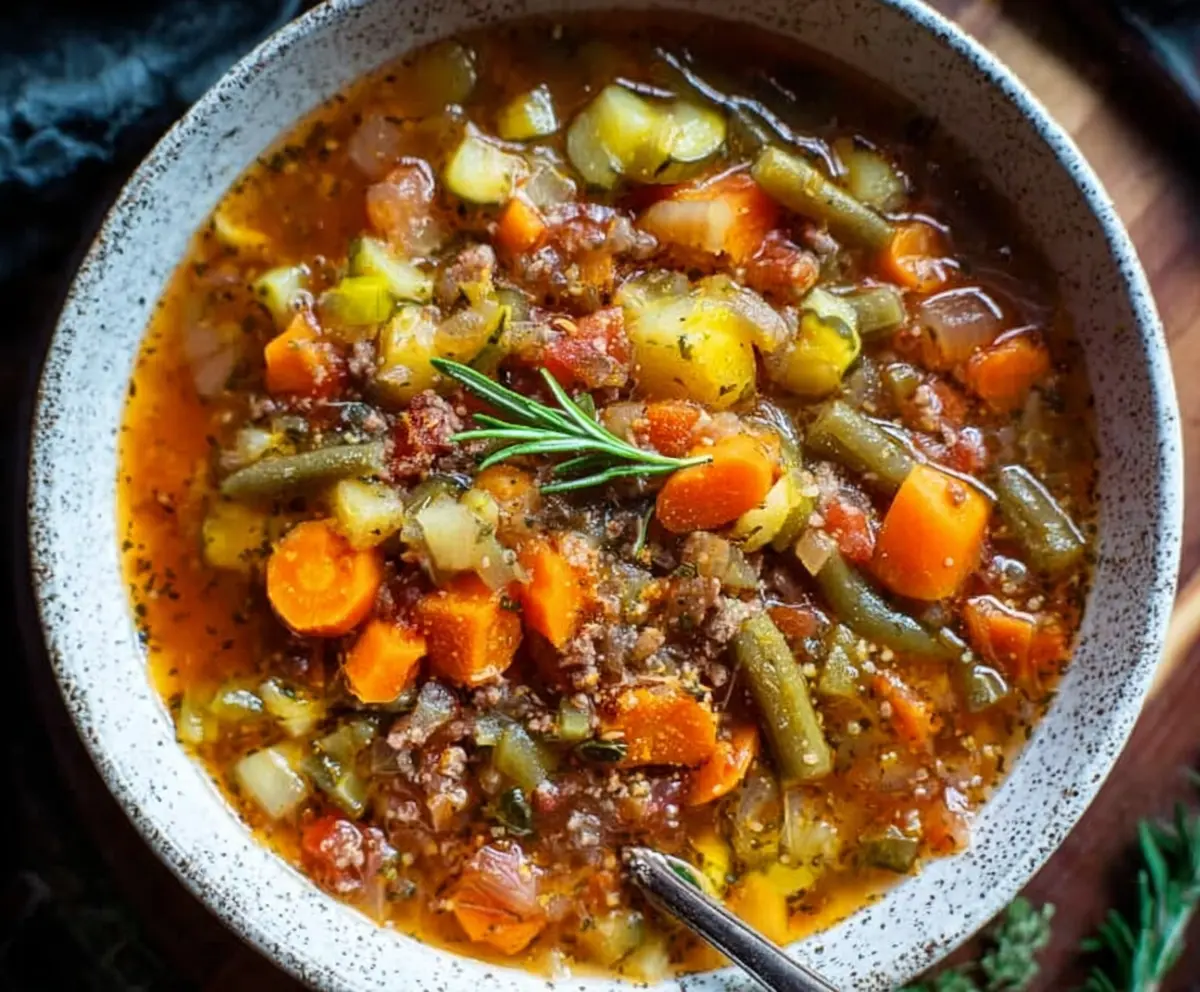
Rustic Vegetable Soup is a hearty, simple dish packed with fresh veggies like carrots, potatoes, celery, and tomatoes simmered together until everything is tender and full of flavor. It’s the kind of soup that feels like a warm hug on a chilly day, with a broth that’s both comforting and satisfying without being complicated.
I love making this soup when I want something easy but wholesome. The best part is how flexible it is—you can toss in whatever veggies you have on hand, and it always turns out tasty. I usually add a pinch of herbs like thyme or rosemary to give it a little extra depth, and sometimes a splash of lemon juice at the end to brighten it all up.
Serving this soup with some crusty bread or a simple grilled cheese sandwich makes it a perfect meal for lunch or dinner. It’s one of those dishes that feels just right whether you’re sitting down with family or packing it up for work the next day. Whenever I make it, I feel like I’m filling both my belly and my soul with something truly good and honest.
Key Ingredients & Substitutions
Olive Oil: This adds a gentle start to your soup by sautéing onions and garlic. If you prefer, you can use avocado oil or sunflower oil for a milder flavor or higher smoke point.
Onion & Garlic: They build the soup’s foundation with classic flavor. Yellow onion is my favorite, but you can use white or even shallots. Garlic powder works in a pinch, though fresh gives the best aroma.
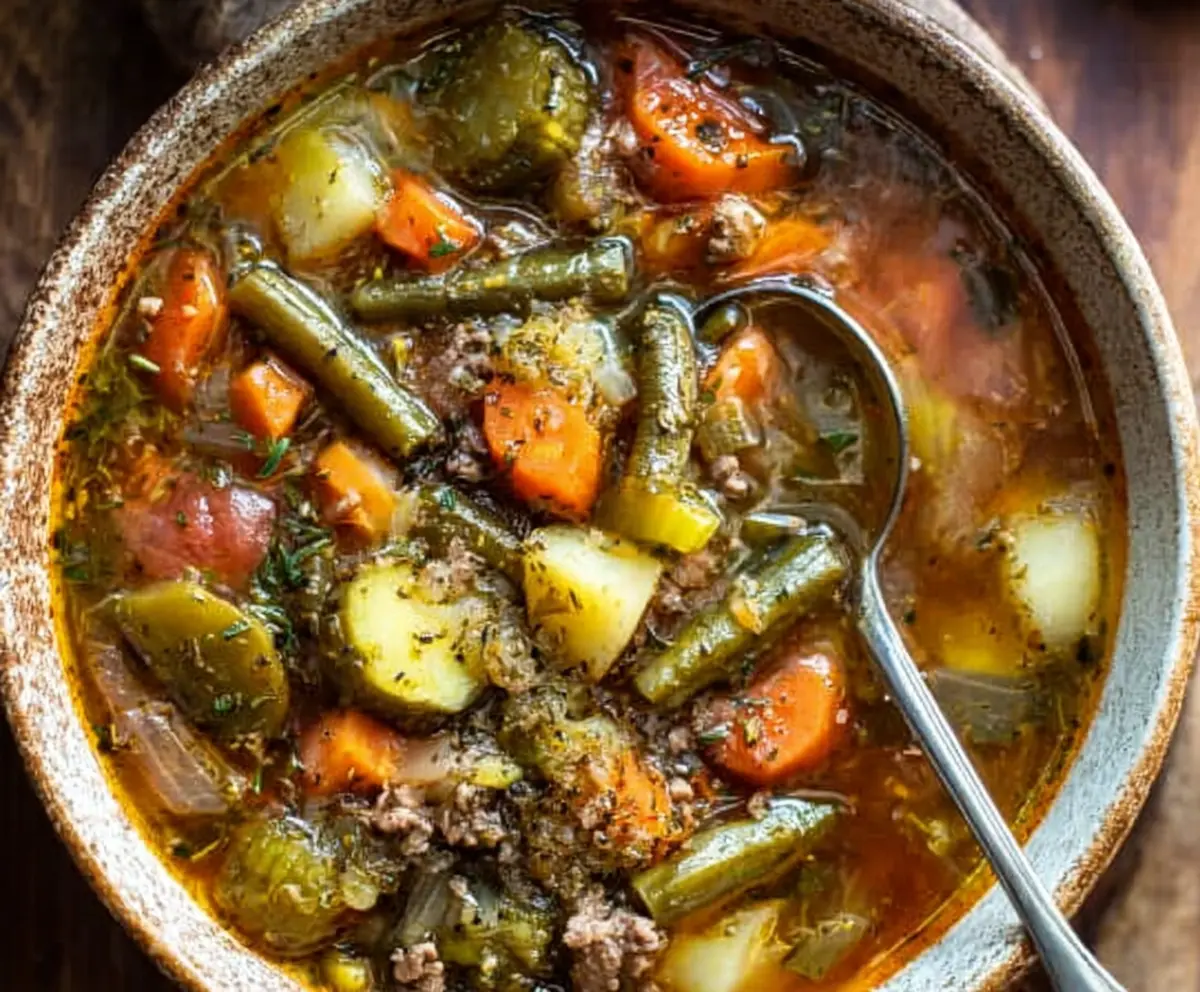
Vegetables: Carrots, celery, potatoes, and green beans give the soup heartiness and texture. Feel free to swap in zucchini, bell peppers, or frozen peas to match your pantry or season.
Diced Tomatoes: Canned tomatoes bring acidity and sweetness to balance the soup. If fresh tomatoes are in season, use about 2 cups chopped instead.
Herbs & Seasonings: Thyme, oregano, basil, and bay leaf create that comforting herbal note. Fresh herbs can replace dried if you have more on hand—just use about three times the amount.
How Can You Get Well-Cooked Vegetables Without Losing Their Shape?
One challenge is cooking the veggies just right—soft but not mushy. Here’s how I do it:
- Sauté onions and garlic first to unlock flavor without overcooking the rest.
- Add hard veggies like carrots, celery, and potatoes next since they take longer to soften.
- Put in quicker-cooking items like green beans later so they stay bright and firm.
- Keep the simmer gentle, cover the pot to keep moisture, and check veggies after 20 minutes for doneness.
This step-by-step layering keeps each vegetable tasty and pleasant to bite. And remember to taste and adjust salt and pepper at the end for the best balance.
Equipment You’ll Need
- Large pot or Dutch oven – perfect for simmering the soup evenly and holding all the veggies comfortably.
- Wooden spoon – great for stirring without scratching your pot and helps mix flavors well.
- Sharp chef’s knife – makes chopping vegetables quick and safe, so pieces cook evenly.
- Cutting board – provides a stable surface to chop your veggies easily and protect your counters.
- Ladle – handy for serving the soup into bowls without spills.
Flavor Variations & Add-Ins
- Add cooked sausage or diced chicken for a protein boost, making it a heartier meal.
- Mix in kale or spinach near the end for extra greens and nutrients that wilt quickly.
- Stir in cooked pasta or rice just before serving to turn it into a filling one-pot dinner.
- Sprinkle with grated Parmesan or add a dollop of pesto for a cheesy, herby twist.
Rustic Vegetable Soup
Ingredients You’ll Need:
Vegetables & Pantry:
- 2 tablespoons olive oil
- 1 medium onion, chopped
- 2 cloves garlic, minced
- 2 medium carrots, sliced
- 2 stalks celery, chopped
- 1 medium potato, peeled and diced
- 1 cup green beans, trimmed and cut into 1-inch pieces
- 1 (14.5 oz) can diced tomatoes with juice
- 6 cups vegetable broth or water
Herbs & Seasonings:
- 1 teaspoon dried thyme
- 1 teaspoon dried oregano
- 1 teaspoon dried basil
- 1 bay leaf
- Salt and black pepper to taste
- Fresh rosemary sprig for garnish (optional)
How Much Time Will You Need?
This recipe takes about 10 minutes for preparation and about 30 minutes to cook, for a total of around 40 minutes. You’ll sauté the vegetables, then simmer the soup until the veggies are tender and flavors meld perfectly.
Step-by-Step Instructions:
1. Sauté Onion and Garlic:
Heat the olive oil in a large pot over medium heat. Add the chopped onion and minced garlic. Cook, stirring occasionally, until they’re soft and fragrant—about 3 to 4 minutes. This builds a tasty base for your soup.
2. Add Root Vegetables:
Stir in the sliced carrots, chopped celery, and diced potatoes. Cook these together for another 5 minutes, giving them a head start to soften and release flavor.
3. Add Remaining Veggies and Tomatoes:
Next, add the green beans and the canned diced tomatoes with their juice. Give everything a good stir.
4. Add Broth and Herbs:
Pour in the vegetable broth. Then add the dried thyme, oregano, basil, and bay leaf. Stir to mix all the ingredients well.
5. Simmer the Soup:
Bring the soup to a boil, then turn the heat down to low. Cover the pot and let everything gently simmer for 25-30 minutes, or until the vegetables are tender.
6. Season and Serve:
Remove the bay leaf, then taste and season with salt and black pepper as you like. Ladle the warm soup into bowls and garnish with a sprig of fresh rosemary if you have it.
This soup is perfect served with warm crusty bread for a cozy, satisfying meal that highlights the simple goodness of fresh vegetables and herbs.
Can I Use Frozen Vegetables Instead of Fresh?
Yes! Frozen veggies work well in this soup. Just add them a few minutes earlier during the simmering step since they’re already partially cooked. This helps keep the texture balanced.
How Long Can I Store Leftover Soup?
Store leftovers in an airtight container in the fridge for up to 4 days. Reheat gently on the stove or in the microwave, stirring occasionally to heat evenly.
Can I Make This Soup in Advance?
Absolutely! The flavors actually deepen when the soup sits overnight. Just cool it completely before refrigerating and reheat before serving.
What Can I Use Instead of Vegetable Broth?
If you don’t have vegetable broth, water works fine—just add a little extra seasoning to boost flavor. You could also use chicken broth if you don’t need it to be vegetarian.