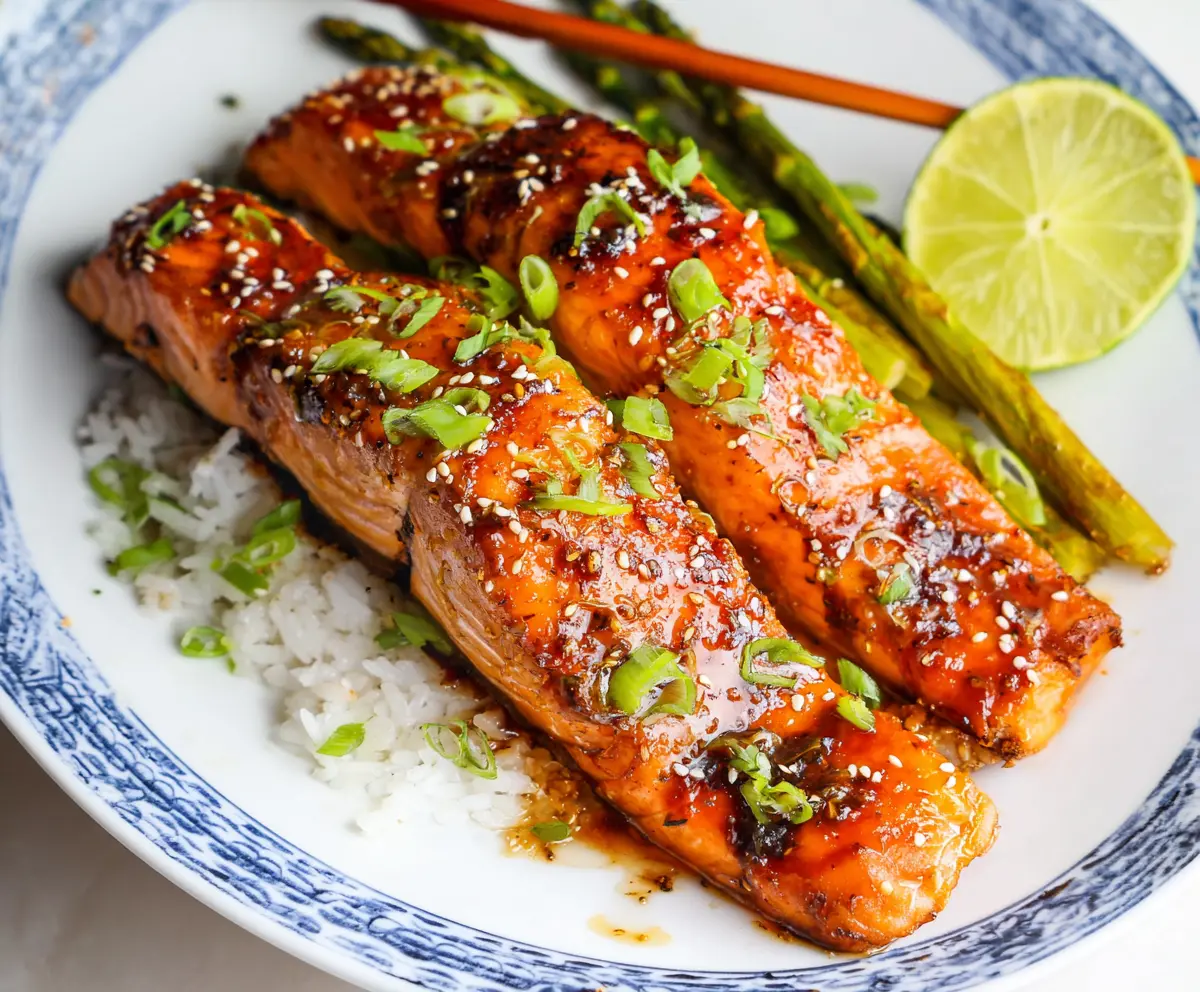
Baked Teriyaki Salmon is a delicious, simple dish featuring tender salmon glazed with a sweet and tangy teriyaki sauce. The salmon bakes up juicy and flaky, while the sauce caramelizes just enough to add a nice sticky finish. It’s a perfect balance of flavors that feels both comforting and fresh.
I love making this dinner when I want something quick but still special. The teriyaki sauce can be homemade or store-bought, which makes it super easy to pull together on busy nights. One of my favorite tips is to sprinkle a little sesame seed on top before baking for an extra touch of nuttiness and crunch.
To serve, I often pair it with steamed rice and roasted veggies like broccoli or snap peas. It’s such a crowd-pleaser and perfect for sharing with family or friends. Whenever I make this salmon dinner, the kitchen smells amazing, and everyone always asks me to make it again soon!
Key Ingredients & Substitutions
Salmon Fillets: Fresh or thawed salmon works best for a tender, flaky texture. If you prefer, wild-caught or farm-raised can be used—each adds a slightly different flavor.
Soy Sauce: Use low sodium soy sauce to keep salt levels balanced. For gluten-free, try tamari or coconut aminos, which work well in teriyaki taste.
Honey or Maple Syrup: Both provide natural sweetness to balance the soy. Maple syrup creates a gentler sweetness and is great if you want to avoid honey.
Garlic & Ginger: Fresh minced garlic and grated ginger bring authentic depth to the sauce. Powder versions can be used in a pinch but are less vibrant.
Asparagus: As a side, asparagus roasts beautifully alongside salmon. You could swap it with green beans, snap peas, or broccoli for variety.
How Do You Get a Sticky, Delicious Teriyaki Glaze on Salmon?
The key is building a sauce that’s thick enough to coat without drowning the fish. Simmer the sauce ingredients together, then add the cornstarch slurry to gently thicken it. Brush this thickened sauce onto salmon before baking.
- Make sure the sauce simmers but doesn’t boil vigorously to avoid bitterness.
- Apply the sauce in layers—brush before baking and spoon more on after to get a shiny, sticky finish.
- Baking at 400°F allows the glaze to caramelize nicely without overcooking the salmon.
- If you want extra caramelization, you can broil the salmon for the last 1-2 minutes, but watch carefully to avoid burning.
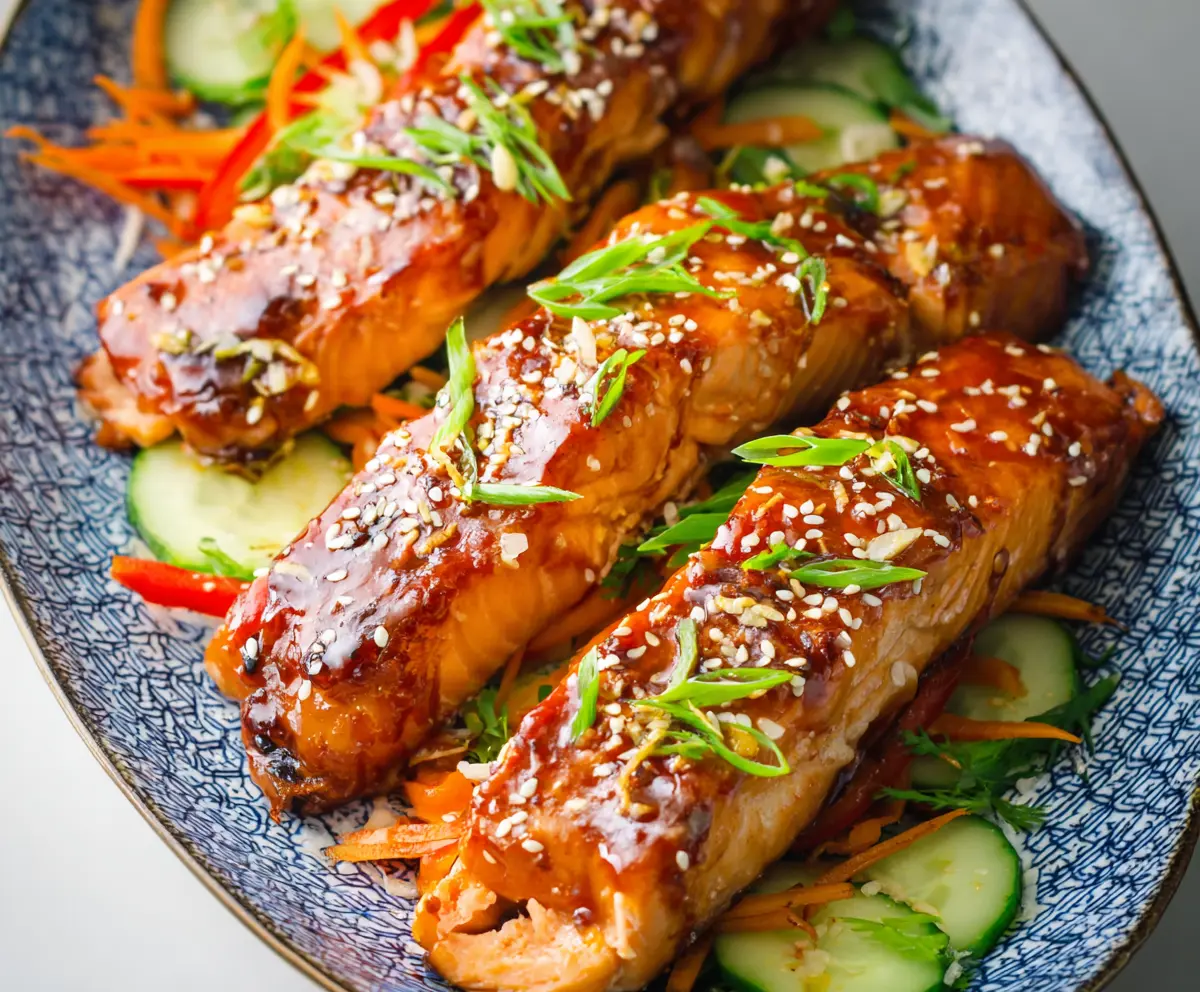
Equipment You’ll Need
- Baking sheet – perfect for cooking salmon and roasting asparagus at the same time.
- Parchment paper or foil – makes cleanup easy and prevents sticking.
- Small saucepan – you’ll use it to simmer and thicken the teriyaki sauce.
- Pastry brush – helps you spread the sauce evenly over the salmon.
- Sharp knife – for slicing green onions and trimming asparagus cleanly.
Flavor Variations & Add-Ins
- Use cod or halibut instead of salmon for a milder, flaky fish option.
- Add steamed broccoli or snap peas alongside the asparagus for extra color and crunch.
- Stir in a teaspoon of grated fresh chili or a dash of chili flakes into the sauce for a spicy kick.
- Top the salmon with crushed macadamia nuts for a crunchy texture and nutty flavor.
How to Make Baked Teriyaki Salmon Dinner
Ingredients You’ll Need:
For the Salmon and Sauce:
- 2 salmon fillets (6 oz each), skin removed
- 1/4 cup soy sauce (low sodium preferred)
- 2 tablespoons honey or maple syrup
- 1 tablespoon rice vinegar
- 1 teaspoon sesame oil
- 2 garlic cloves, minced
- 1 teaspoon fresh ginger, grated
- 1 tablespoon cornstarch mixed with 2 tablespoons water (optional, for thickening)
- 1 tablespoon sesame seeds
- 2 green onions, thinly sliced
For the Sides:
- 1 cup cooked white rice
- 1/2 pound asparagus, trimmed
- Olive oil (for drizzling asparagus)
- Lime wedges (optional, for serving)
How Much Time Will You Need?
This recipe takes about 10 minutes to prepare and 12–15 minutes to bake, making it perfect for a quick, healthy dinner. The teriyaki sauce comes together quickly on the stove while your oven heats up.
Step-by-Step Instructions:
1. Prepare the Oven and Sauce:
Preheat your oven to 400°F (200°C). Line a baking sheet with parchment paper or foil to keep things tidy. In a small saucepan, combine soy sauce, honey (or maple syrup), rice vinegar, sesame oil, minced garlic, and grated ginger. Bring this mix to a gentle simmer over medium heat.
2. Thicken the Sauce (Optional):
If you want a thicker glaze, stir in the cornstarch mixed with water. Keep cooking for 1–2 minutes until the sauce thickens slightly, then remove from heat.
3. Arrange and Glaze the Salmon:
Place the salmon fillets on the prepared baking sheet. Brush about two-thirds of the teriyaki sauce generously over the salmon, making sure every bit is coated with that sweet and savory flavor.
4. Prepare the Asparagus:
Arrange trimmed asparagus next to the salmon on the same sheet. Drizzle lightly with olive oil and sprinkle with a pinch of salt and pepper to taste.
5. Bake Everything Together:
Place the baking sheet in the oven and bake for 12–15 minutes. The salmon should flake easily with a fork, and the asparagus will be tender but still slightly crisp.
6. Finish and Serve:
Once out of the oven, spoon the remaining teriyaki sauce over the salmon for extra flavor. Sprinkle sesame seeds and sliced green onions on top for a fresh, crunchy touch. Serve the salmon and asparagus on a bed of steamed white rice, with lime wedges on the side for a bright citrus zing if you like.
Enjoy this tasty, easy baked teriyaki salmon dinner that’s packed with flavor and ready in under 30 minutes!
Can I Use Frozen Salmon for This Recipe?
Yes, you can use frozen salmon—just be sure to thaw it completely in the fridge overnight before baking. Pat it dry with paper towels to remove excess moisture for better glaze adhesion.
How Can I Make the Teriyaki Sauce Thicker?
Simply mix 1 tablespoon cornstarch with 2 tablespoons cold water to create a slurry, then stir it into the simmering sauce. Cook for 1-2 minutes until it thickens to your liking.
What Are Good Side Dish Alternatives?
If you want to switch things up, try serving the salmon with steamed broccoli, snap peas, or roasted green beans instead of asparagus. Quinoa or cauliflower rice are great low-carb rice substitutes.
How Should I Store Leftovers?
Keep any leftover salmon and asparagus in an airtight container in the refrigerator for up to 3 days. Reheat gently in the oven or microwave to maintain moisture and flavor.